Welcome to the definitive guide on ‘and azure’—a phrase that might seem cryptic at first, but holds immense significance in the realms of cloud computing, digital transformation, and modern tech ecosystems. Let’s decode its meaning and power together.
Understanding the Phrase ‘and azure’
The term ‘and azure’ may appear fragmented or grammatically incomplete, but in the context of technology, especially cloud infrastructure and software integration, it often symbolizes the conjunction of systems, platforms, or services with Microsoft Azure. It represents connectivity, integration, and synergy between existing technologies and the Azure cloud platform.
What Does ‘and azure’ Actually Mean?
At face value, ‘and azure’ is a grammatical fragment. However, in search queries, documentation, and developer forums, users frequently type phrases like ‘connect to Azure’, ‘integrate with Azure’, or ‘work with Azure’. Over time, search engines have learned to interpret ‘and azure’ as a shorthand for such integrative actions.
- It often appears in logs, code comments, or configuration files where ‘and Azure’ is part of a larger sentence.
- Developers might write: ‘Deploy app and Azure’—meaning deploy the application along with Azure resources.
- In SEO analytics, ‘and azure’ has emerged as a long-tail keyword indicating intent to combine systems with Azure services.
Why Is This Phrase Gaining Attention?
The rise of ‘and azure’ as a searchable term reflects the growing dependency on hybrid architectures. Organizations are no longer asking if they should use Azure, but how to connect their legacy systems, third-party tools, and internal platforms with Azure.
“The future of enterprise IT isn’t about choosing one platform—it’s about making everything work and Azure.” — Cloud Architect, Microsoft MVP
Microsoft Azure: The Backbone of Modern Cloud Integration
Microsoft Azure is one of the leading cloud computing platforms, offering over 200 services including computing, analytics, storage, networking, and more. When people say ‘and azure’, they’re often referring to integrating their current stack with this robust ecosystem.
Core Services Offered by Azure
Azure provides a comprehensive suite of tools designed for scalability, security, and global reach. Key offerings include:
- Azure Virtual Machines: Scalable computing resources for running Windows and Linux environments.
- Azure Blob Storage: Secure, durable object storage for unstructured data.
- Azure Active Directory: Identity and access management for secure authentication.
- Azure Kubernetes Service (AKS): Managed Kubernetes for containerized applications.
- Azure Functions: Serverless compute for event-driven workloads.
These services form the foundation upon which ‘and azure’ integrations are built.
Global Reach and Data Centers
Azure operates in over 60 regions worldwide, making it one of the most geographically distributed cloud providers. This global presence ensures low latency and compliance with local data regulations—critical factors when integrating systems and Azure.
For example, a European company using SAP can integrate its ERP system and Azure while ensuring GDPR compliance through data residency controls.
Learn more about Azure regions: Azure Global Infrastructure.
Why ‘and azure’ Matters in Enterprise Architecture
The phrase ‘and azure’ encapsulates a strategic shift: from monolithic, isolated systems to interconnected, cloud-enabled architectures. Enterprises are increasingly adopting a ‘connect everything and Azure‘ mindset.
Hybrid Cloud Strategies
Many organizations operate in hybrid environments—part on-premises, part in the cloud. Azure Stack, Azure Arc, and other tools enable seamless management across environments. This is where ‘and azure’ becomes operational.
- Azure Arc allows you to manage on-premises servers, edge devices, and multi-cloud resources from the Azure portal.
- With Azure Arc, you can apply policies, monitor performance, and deploy updates and Azure—even if the resource isn’t hosted in Azure.
This capability transforms ‘and azure’ from a phrase into a functional architecture.
Integration with Legacy Systems
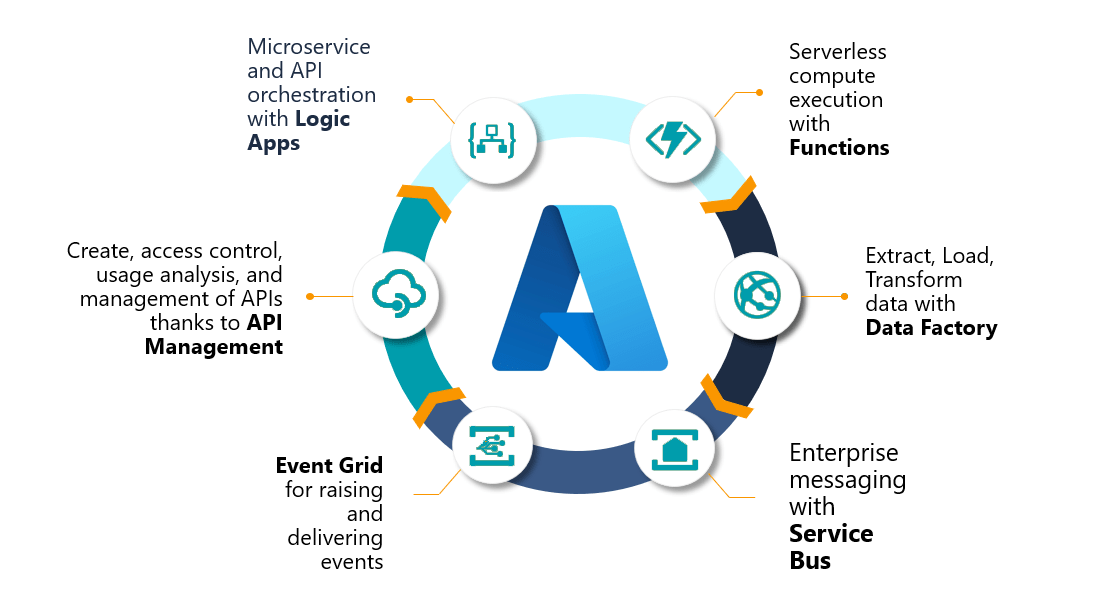
One of the biggest challenges in digital transformation is connecting decades-old systems with modern cloud platforms. Azure Logic Apps, API Management, and Event Grid provide the middleware needed to bridge this gap.
- Use Logic Apps to automate workflows between on-premises databases and Azure services.
- Leverage API Management to expose legacy APIs securely to cloud applications.
- Employ Azure Migrate to assess and move VMs, databases, and applications to Azure.
These tools make ‘and azure’ not just possible, but efficient and scalable.
Top 7 Use Cases of ‘and azure’ in Real-World Scenarios
The power of ‘and azure’ lies in its practical applications. Below are seven real-world scenarios where integrating systems and Azure delivers transformative results.
1. Connecting CRM Systems with Azure AI
Businesses using Salesforce or Dynamics 365 can enhance customer insights by integrating their CRM and Azure cognitive services.
- Use Azure Text Analytics to detect sentiment in customer emails.
- Apply Azure Machine Learning to predict churn based on historical data.
- Integrate Power BI and Azure for real-time dashboards.
This integration turns raw CRM data into actionable intelligence.
2. DevOps Pipelines with GitHub and Azure
GitHub Actions can be seamlessly connected and Azure to automate CI/CD workflows.
- Trigger Azure deployments directly from GitHub commits.
- Use Azure Pipelines to build, test, and deploy applications across environments.
- Secure secrets using Azure Key Vault integrated with GitHub repositories.
Microsoft’s acquisition of GitHub has deepened this integration, making ‘and azure’ a natural part of modern DevOps.
Explore GitHub-Azure integration: GitHub Actions for Azure.
3. IoT and Azure: Building Smart Ecosystems
IoT devices generate massive amounts of data. Azure IoT Hub, Stream Analytics, and Time Series Insights allow organizations to collect, process, and analyze this data and Azure.
- Connect industrial sensors and Azure for predictive maintenance.
- Use Azure Digital Twins to create virtual models of physical environments.
- Deploy edge computing with Azure IoT Edge for real-time decision-making.
For example, a manufacturing plant can monitor equipment health and Azure, reducing downtime by up to 40%.
4. Security and Compliance with Azure Sentinel
Azure Sentinel is a cloud-native SIEM (Security Information and Event Management) tool that integrates with on-premises and multi-cloud environments.
- Collect logs from firewalls, endpoints, and applications and Azure.
- Use AI-driven analytics to detect threats in real time.
- Automate responses with playbooks that trigger actions across systems.
This makes ‘and azure’ a cornerstone of modern cybersecurity strategies.
5. Data Warehousing with Synapse and Azure
Azure Synapse Analytics combines big data and data warehousing into a single service. Organizations can connect their SQL Server databases and Azure for scalable analytics.
- Ingest data from on-premises sources using Azure Data Factory.
- Run T-SQL queries on petabyte-scale data lakes.
- Visualize results with Power BI integrated and Azure.
This unified approach eliminates data silos and accelerates decision-making.
6. AI and Machine Learning Integration
Azure Machine Learning enables developers to build, train, and deploy models at scale. When combined with existing data platforms and Azure, it unlocks predictive capabilities.
- Train models on historical sales data stored in Azure Blob Storage.
- Deploy models as web services accessible via APIs.
- Use Azure AutoML to simplify model creation for non-experts.
For instance, a retail chain can forecast demand and Azure, optimizing inventory across stores.
7. Multi-Cloud Orchestration with Azure Arc
Enterprises using AWS or Google Cloud can still benefit from ‘and azure’ through Azure Arc.
- Extend Azure management to AWS EC2 instances or GCP VMs.
- Apply consistent security policies across clouds.
- Monitor performance and costs from a single dashboard.
This breaks down cloud silos and makes ‘and azure’ a unifying force in hybrid IT.
How to Implement ‘and azure’ in Your Organization
Successfully integrating systems and Azure requires a structured approach. Here’s a step-by-step guide to get started.
Step 1: Assess Your Current Infrastructure
Begin with a comprehensive audit of your existing systems, applications, and data flows.
- Identify which systems are candidates for cloud migration.
- Evaluate dependencies between applications.
- Use Azure Migrate to assess VMs, databases, and web apps.
This assessment forms the foundation for your ‘and azure’ strategy.
Step 2: Define Integration Goals
What do you want to achieve by connecting your systems and Azure?
- Improve scalability and performance?
- Enhance security and compliance?
- Enable AI-driven insights?
Clear goals will guide your technology choices and prioritization.
Step 3: Choose the Right Azure Services
Not all Azure services are needed for every integration. Select based on your use case.
- For data integration: Azure Data Factory, Logic Apps.
- For security: Azure Sentinel, Azure AD.
- For AI: Azure Cognitive Services, Azure ML.
Refer to the official Azure architecture center: Azure Architecture Center.
Step 4: Build and Test Integration Workflows
Develop integration pipelines in a staging environment before going live.
- Use Azure DevOps for version control and CI/CD.
- Test data synchronization, error handling, and performance.
- Validate security controls and access permissions.
Thorough testing minimizes disruptions during deployment.
Step 5: Monitor and Optimize
After deployment, continuous monitoring is essential.
- Use Azure Monitor to track system health and performance.
- Set up alerts for anomalies or failures.
- Optimize costs using Azure Cost Management.
Regular optimization ensures your ‘and azure’ integration remains efficient and cost-effective.
Common Challenges When Integrating ‘and azure’
While the benefits are significant, integrating systems and Azure comes with challenges that must be addressed.
Data Latency and Network Performance
Transferring large volumes of data between on-premises systems and Azure can introduce latency.
- Solution: Use Azure ExpressRoute for private, high-speed connections.
- Implement data compression and batching to reduce transfer times.
- Cache frequently accessed data locally using Azure Cache for Redis.
Security and Identity Management
Integrating systems increases the attack surface. Ensuring secure authentication and authorization is critical.
- Use Azure AD for centralized identity management.
- Implement multi-factor authentication (MFA) for all users.
- Apply role-based access control (RBAC) to limit permissions.
Regularly audit access logs and permissions to detect anomalies.
Cost Management and Budgeting
Cloud costs can spiral if not monitored. Many organizations underestimate the expenses of ‘and azure’ integrations.
- Use Azure Cost Management to track spending by service, department, or project.
- Set up budgets and alerts to prevent overspending.
- Right-size VMs and delete unused resources to optimize costs.
Proactive cost management ensures ROI on your ‘and azure’ investments.
Future Trends: Where ‘and azure’ Is Heading
The evolution of ‘and azure’ is tied to broader trends in cloud computing, AI, and edge computing. Here’s what to expect in the coming years.
AI-Driven Integration Automation
Microsoft is investing heavily in AI-powered tools that can automatically detect integration points and suggest configurations.
- Azure AI can analyze system logs and recommend optimal integration workflows.
- Predictive scaling will adjust resources and Azure based on anticipated demand.
- Natural language interfaces may allow admins to say, ‘Connect this app and Azure,’ and have the system configure itself.
Edge and Azure: The Next Frontier
As IoT and real-time processing grow, the edge and Azure integration will become critical.
- Azure Percept enables AI at the edge for vision and speech applications.
- 5G networks will enhance connectivity between edge devices and Azure.
- Federated learning models will train on edge devices and sync insights and Azure.
This shift will redefine what ‘and azure’ means—no longer just cloud integration, but distributed intelligence.
Sustainability and Green Computing
Microsoft has committed to being carbon negative by 2030. As organizations integrate and Azure, they can leverage Azure’s sustainability tools.
- Azure Sustainability Calculator helps estimate the carbon impact of workloads.
- Optimize resource usage to reduce energy consumption.
- Choose data centers powered by renewable energy.
‘And azure’ will increasingly be associated with environmentally responsible computing.
Best Practices for Maximizing ‘and azure’ Success
To ensure your integration with Azure delivers maximum value, follow these best practices.
Adopt a Phased Approach
Start small with a pilot project before scaling across the organization.
- Choose a non-critical system for initial integration.
- Measure performance, security, and user feedback.
- Iterate and improve before expanding.
This reduces risk and builds internal confidence.
Invest in Training and Skills Development
Your team needs the right skills to manage ‘and azure’ environments.
- Enroll staff in Microsoft Learn modules on Azure fundamentals.
- Certify key personnel in Azure Administrator, Developer, or Architect roles.
- Encourage hands-on labs and sandbox environments for practice.
Skilled teams are essential for long-term success.
Leverage Azure Blueprints and Templates
Use pre-built templates to standardize deployments and enforce compliance.
- Azure Blueprints define repeatable environments with security and governance controls.
- ARM (Azure Resource Manager) templates automate infrastructure provisioning.
- Bicep, a newer DSL, simplifies template authoring.
These tools ensure consistency and reduce configuration errors.
Monitor, Measure, and Iterate
Continuous improvement is key to sustaining ‘and azure’ benefits.
- Track KPIs like uptime, latency, cost per transaction, and user satisfaction.
- Conduct regular reviews of integration performance.
- Update workflows based on changing business needs.
Treat ‘and azure’ as an ongoing journey, not a one-time project.
What does ‘and azure’ mean in tech?
The phrase ‘and azure’ typically refers to the integration of existing systems, applications, or data platforms with Microsoft Azure services. It symbolizes connectivity, hybrid architectures, and digital transformation initiatives.
How do I connect my system with Azure?
You can connect your system with Azure using tools like Azure Arc, Azure API Management, Logic Apps, or ExpressRoute. The method depends on your use case—whether it’s data sync, security, or application deployment.
Is ‘and azure’ a real keyword?
Yes, ‘and azure’ appears as a long-tail keyword in SEO analytics, often indicating user intent to integrate systems with Azure. While grammatically incomplete, it reflects real-world search behavior.
What are the benefits of integrating with Azure?
Benefits include scalability, enhanced security, AI-driven insights, global reach, cost efficiency, and improved disaster recovery. Integrating and Azure enables modern, resilient IT architectures.
Can I use Azure with other clouds?
Absolutely. Azure Arc allows you to manage AWS and Google Cloud resources from the Azure portal, enabling true multi-cloud management and Azure.
Understanding ‘and azure’ is more than decoding a phrase—it’s about embracing a new paradigm of interconnected, cloud-powered systems. From hybrid architectures to AI-driven automation, integrating with Azure unlocks unprecedented capabilities. By following best practices, addressing challenges, and planning strategically, organizations can harness the full power of ‘and azure’ to drive innovation, efficiency, and growth. The future of technology isn’t isolated systems—it’s everything working and Azure.
Further Reading:
